Interdisciplinary CertificateProgram in Jewish Studies
Міжнародна міждисциплінарна сертифікатна програма з юдаїки
Professor David Fishman visits Ukraine for archival research project
- Zoriana Kivsa
- July 26, 2025
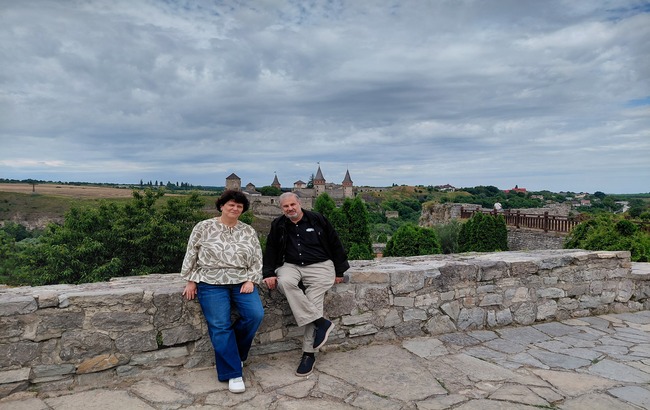
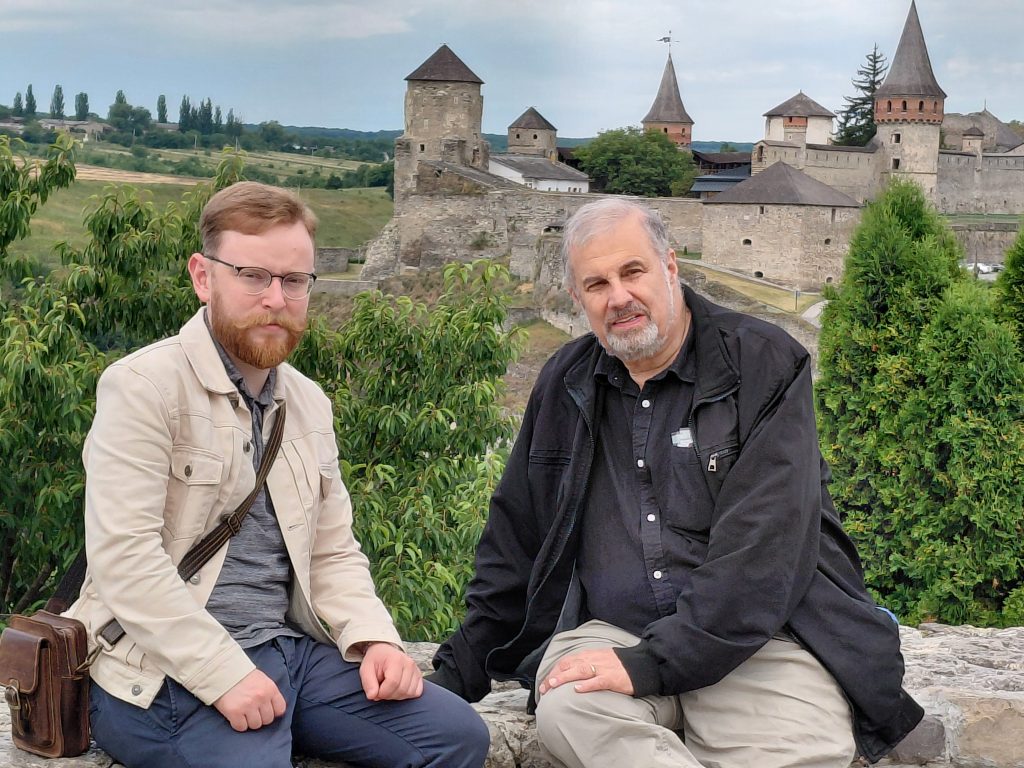
David Fishman, Professor of History at the Jewish Theological Seminary of America (New York), whose ancestors came from the Podillia, visited Kamianets-Podilskyi as part of his archival research project. During his visit, he met with the leadership of the International Interdisciplinary Certificate Program in Jewish Studies, Administrative Director Olena Zaslavska and Executive Director Eugene Levinzon.
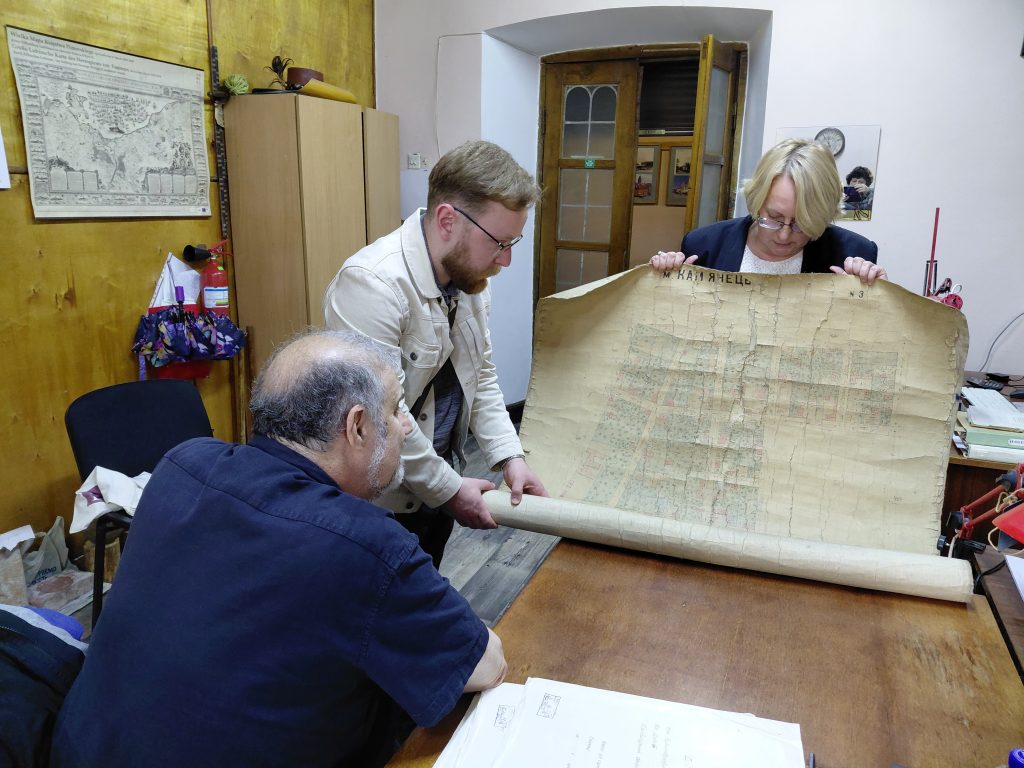
As part of the visit, Professor Fishman met with Olena Vilchynska, Chief Curator of the collections at the Kamianets National Historical and Architectural Reserve. She introduced him to archival documents, maps, and other materials related to the Jewish history of Kamianets-Podilskyi. Professor Fishman was also shown the Reserve’s unique collection of historical engravings of Podillia and Volhynia by Napoleon Orda.
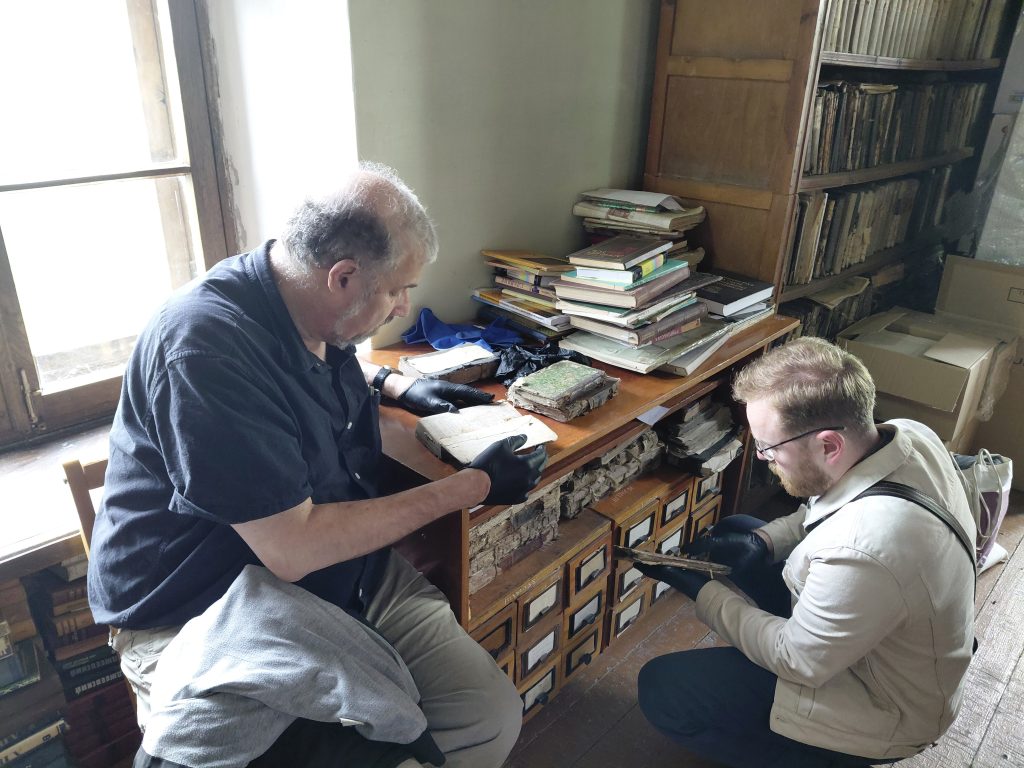
Professor Fishman also visited the Kamianets-Podilskyi State Historical Museum-Reserve, where Chief Curator Inna Shvets and librarian Anastasiia Karpova welcomed him and presented the museum’s collection of Jewish rare books, which comprises approximately 700 historic volumes.
During the visit, Professor Fishman expressed interest in future cooperation, including a possible project to conserve one of Ukraine’s largest museum collections of Jewish rare books.
Later, together with Olena Zaslavska and Eugene Levinzon, Professor Fishman paid tribute to the victims of the Holocaust at the city’s mass graves.
Background: Kamianets-Podilskyi was one of the first sites of mass shootings of Jews following the outbreak of the Second World War. Between 26 and 28 August 1941, more than 23,000 people were murdered there.
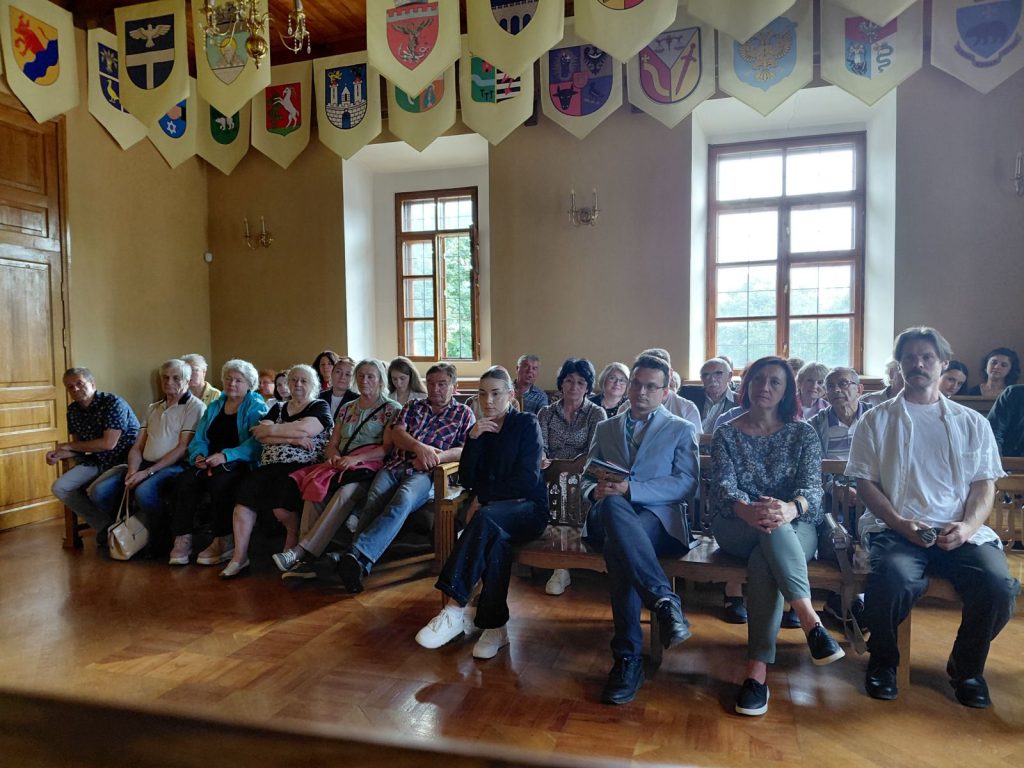
Professor Fishman also attended the presentation of the new tourist guidebook Jewish Kamianets, authored by Eugene Levinzon and Hanna Kivilsha. To commemorate the occasion, he presented Eugene Levinzon with a copy of Kaminits-Podolsk & Its Environs: A Memorial Book of the Jewish Communities, a memorial volume dedicated to the Jewish communities of Kamianets-Podilskyi and the surrounding towns that were destroyed during the Holocaust.
“I am not entirely a stranger to this city, because my grandmother was born in Starokostiantyniv. That is why I am especially pleased to see a guidebook like this devoted to Kamianets-Podilskyi.
What moved me most was seeing the city’s name written on the cover in Hebrew letters as ‘Komenets.’ That is how the local Jews pronounced it. They said tote rather than tate, mome rather than mame. Seeing this authentic form of the name means a great deal to me.
I like this guidebook for several reasons. First of all, it is very accessible. It is written for a broad audience rather than for specialists, making it easy for anyone to read and discover something new.
I am also delighted that it is bilingual. I am convinced that after Ukraine’s victory, when more peaceful times return, many Jewish visitors from the United States and Israel will come here and will be able to use this guidebook.
I see this book as a promise for the future. I hope that for Yevhenii, Hanna, and everyone involved in the project, this is only the first step. The next should be a comprehensive academic study of the history of the Jews of Kamianets-Podilskyi,” Professor Fishman said.
Following the presentation, Professor Fishman visited the Kamianets-Podilskyi branch of the Hesed Besht Charitable Foundation, headed by Marharyta Shopnik, as well as the Kamianets-Podilskyi District Jewish Cultural Society “Sholom,” led by Oleksandr Rudman. In a warm and friendly atmosphere, he met with members of the local Jewish community to discuss a range of current issues, including Jewish life in Ukraine during the ongoing war.