Interdisciplinary CertificateProgram in Jewish Studies
Міжнародна міждисциплінарна сертифікатна програма з юдаїки

First presentation of the tourist guide Jewish Kamianets
- Zoriana Kivsa
- July 16, 2025
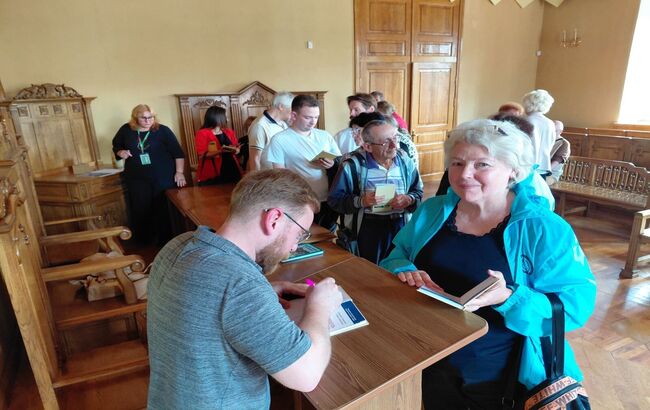
On 8 July, the first public presentation of the tourist guide Jewish Kamianets took place at the Kamianets-Podilskyi Town Hall. The publication is the fourth volume in the Kamianets – Historical and Tourist Route series, which explores the heritage of the main communities that have shaped the city’s history.
The guide was written by:
Yevhenii Levinzon, Executive Director of the International Interdisciplinary Certificate Program in Jewish Studies and author of numerous scholarly publications on the Jewish heritage of Podillia;
Hanna Kivilsha, an independent researcher who has been studying the Jewish heritage of Kamianets-Podilskyi and the surrounding region for more than 30 years.
The volume was edited by Dmytro Vashchuk, PhD in History and Senior Research Fellow at the Institute of History of Ukraine of the National Academy of Sciences of Ukraine.
The foreword was written by Dr. Vladimir Levin, Director of the Center for Jewish Art at the Hebrew University of Jerusalem.
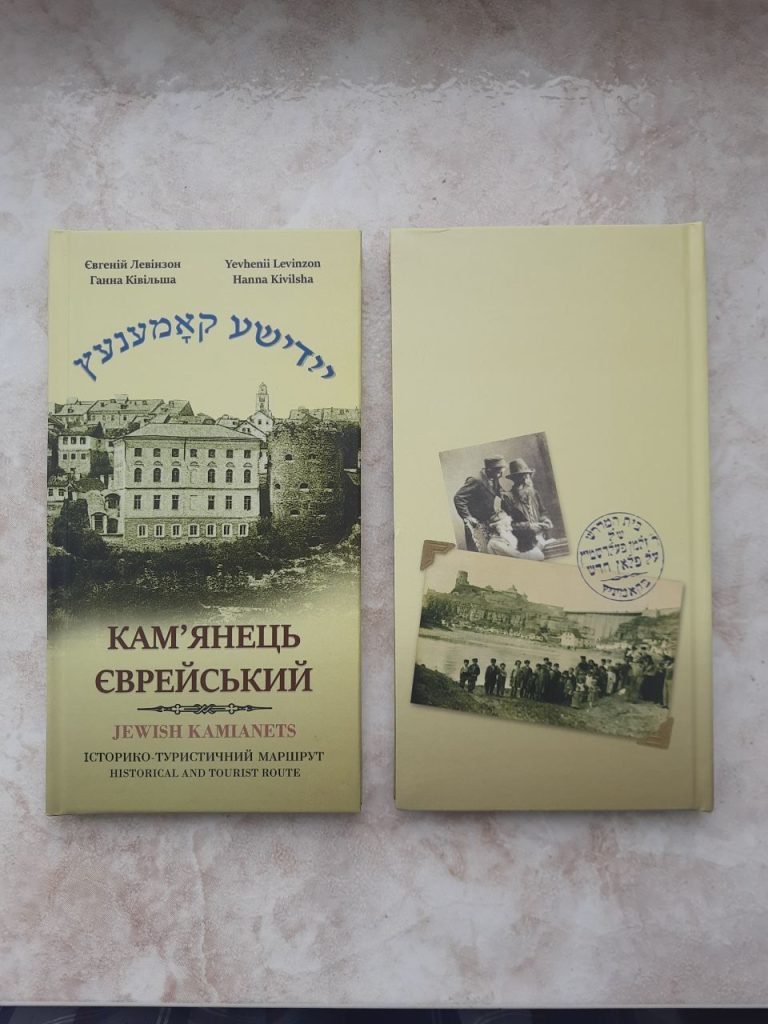
The guide presents 18 sites of Jewish heritage in Kamianets-Podilskyi, highlighting the rich history of what was once one of the largest Jewish communities in Podillia. The publication is based on extensive archival research and offers readers a deeper understanding of the city’s Jewish past.
The tourist guide Jewish Kamianets was published with the participation of the International Interdisciplinary Certificate Program in Jewish Studies and with the support of the Department for Organization and Connection with Israelis Abroad of the World Zionist Organization and the Zionist Federation of Ukraine.
Special thanks go to Yair Lootsteen, Head of the Department for Organization and Connection with Israelis Abroad, whose ancestors came from the Khmelnytskyi region and who played an important role in supporting the publication of the guide.
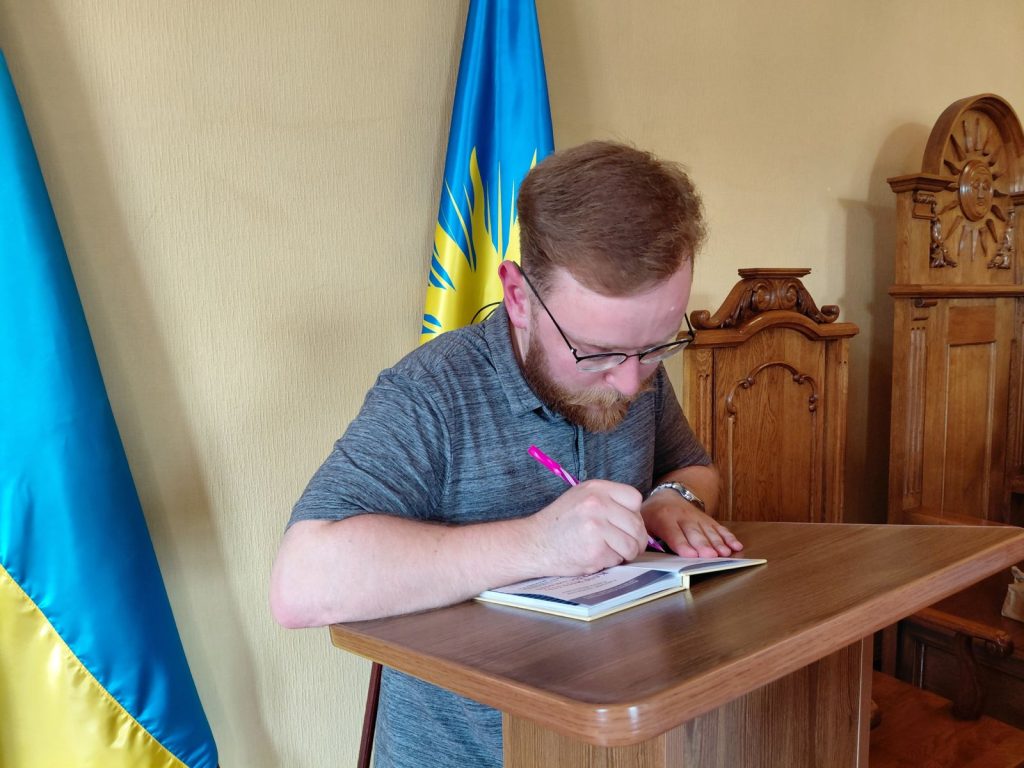
Co-author of the guide Yevhenii Levinzon thanked everyone who contributed to the project and emphasized the role of those who had laid the groundwork for the publication.
“First of all, I would like to thank everyone who came today to support this publication and everyone who has shown an interest in it.
I would especially like to thank Hanna Kivilsha. She was one of the first people to begin researching this subject more than 30 years ago, spending countless hours working in archives. She assembled an extensive collection of materials on the Jewish architectural heritage of Kamianets and Podillia and shared an enormous number of sources with me. Without these materials, this book simply would not have been possible. More importantly, it was you who inspired my own interest in this subject.
I would also like to thank the Museum for hosting today’s event and all of its staff for their assistance with the organization, technical support, and everything they did to make this presentation possible.
And, of course, special thanks go to Olena Vilchynska, Chief Curator of the Collections at the National Historical and Architectural Reserve ‘Kamianets’. I cannot even count the number of hours I spent with you going through inventory books and archival files.”
Olena Zaslavska, Administrative Director of the International Interdisciplinary Certificate Program in Jewish Studies and Executive Director of the Zionist Federation of Ukraine, both of which co-funded the publication, highlighted the importance of issuing the guide in two languages.
“Today is a special occasion for us to gather. The Jewish community of Kamianets is the most recent community to be represented within this project, and today we are joined by people who are part of that community. We know that it was almost entirely destroyed, yet it managed to rebuild itself.
This guide has been published in two languages. As a result, the grandchildren and great-grandchildren of those who no longer live in Ukraine and do not speak Ukrainian will be able to learn about the history of their families and their ancestors.”
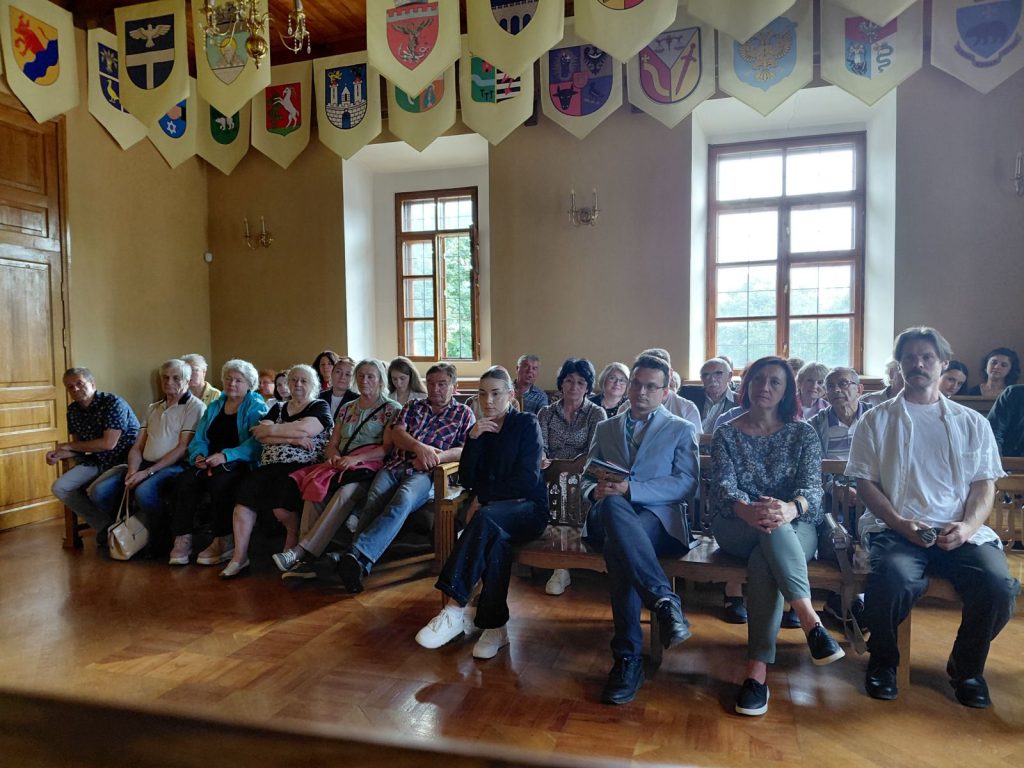
The guide’s editor, Dmytro Vashchuk, described the publication as a genuine work of scholarship.
“I read it carefully from beginning to end and also examined the illustrations. I can confidently say that this is a serious piece of academic research presented in the accessible format of a popular history publication.”
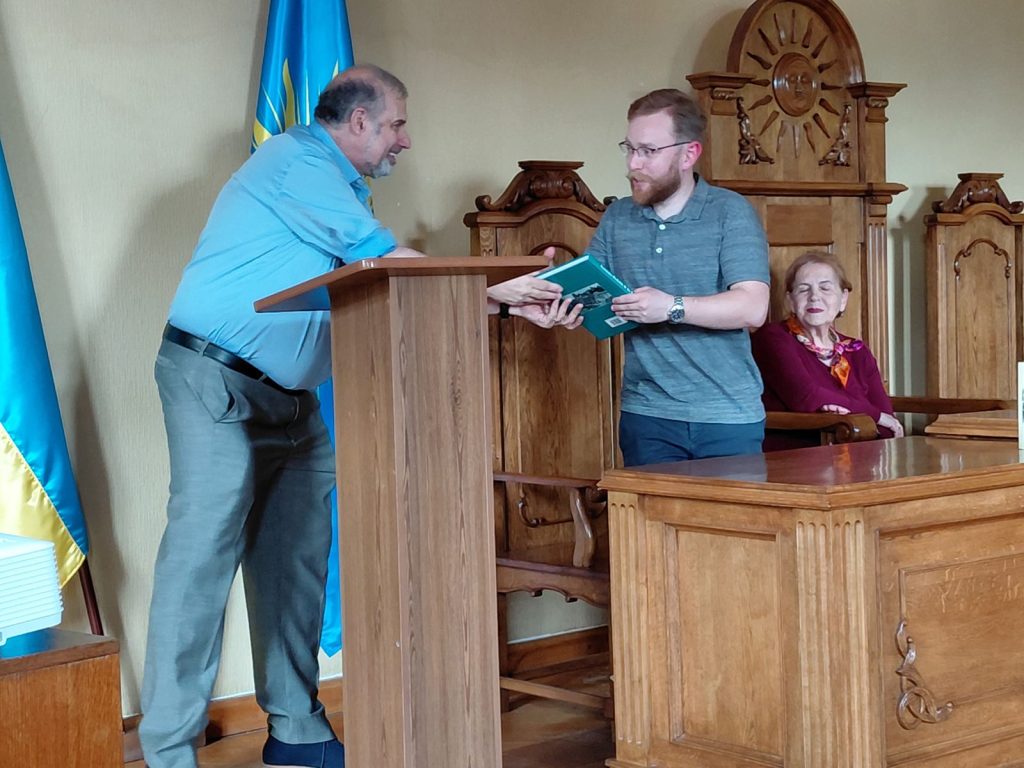
A special guest at the presentation was Professor David Fishman (Jewish Theological Seminary of America). To mark the occasion, he presented Yevhenii Levinzon with a copy of Kaminits-Podolsk & Its Environs: A Memorial Book of the Jewish Communities, a memorial volume dedicated to the Jewish communities of Kamianets-Podilskyi and the surrounding towns that were destroyed during the Holocaust.
Professor Fishman also praised the guide and expressed hope that it would be only the beginning of further research.
“I am not entirely a stranger to this city, as my grandmother was born in Starokostiantyniv. So I am delighted that such a guide to Kamianets-Podilskyi has finally appeared.
One detail particularly caught my attention. On the cover, the city’s name is written in Jewish letters as ‘Komenets’. That is exactly how the local Jewish community pronounced it. They would say tote rather than tate, mome rather than mame. Seeing the city’s name written in that authentic form is deeply moving for me.
I like this guide for many reasons. First, it is highly accessible. It is a book for every reader. It is not overloaded with details, making it easy for anyone to read, understand, and learn something new.
Second, I am very pleased that it is bilingual, with an English edition as well. I am convinced that after Ukraine’s victory, when more peaceful times return, many Jewish visitors from the United States and Israel will come here and will be able to use this guide.
I see this book as a promise of what is to come. I hope that for Yevhenii, Hanna, and everyone involved in this project, this is only the first step. I look forward to seeing a comprehensive scholarly history of the Jews of Kamianets-Podilskyi in the future.”